Karesh Family in Charleston, Sc#q=karesh Family in Charleston, Sc
Previous | Side by side
Eutawville: A View from the North
Past: Ronald Cohen
The Cohens in the living room of the Porcher Artery family home, Eutawville, SC. Standing, Left to right: Abe, Moses, Mary (Moses' wife), Louis , Mary (Marian, Louis'due south wife); seated, left to Janie Marcusright, Corinne (Abe's wife), Raye (Isaac's married woman), Katie Kresh, Abe Karesh (Katie's husband); and Janie Marcus. Collection of Ronald Cohen
My mother, Mary Cohen, née Cohen, was one of eight siblings raised in Eutawville, South Carolina. I grew upwards in the Bronx, where my female parent moved after she married my father, Louis Cohen, in 1924, but I spent most of my summers in Eutawville with my female parent's family. My parents would put me on a train in New York City. When it arrived in Florence, S Carolina, a Eutawville relative would come across me. My earliest retentivity of a trip to the small midlands boondocks was in 1931 when I was five years old. My memories of the visit were especially bright since it seemed every bit if I had gone to another globe—the differences in activities and culture were so striking.
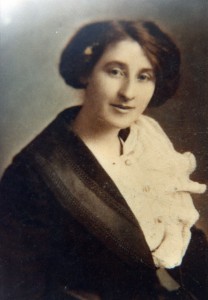
The Writer'southward mother, Mary Cohen, 1916. Collection of Ronald Cohen
In New York we had a heavy wooden front end door that was always locked. In Eutawville, in those days, no i bothered to lock the door. In the North blacks lived in segregated areas, such every bit Harlem. In the southern countryside black and white residences were interspersed, although schools and many businesses were segregated.
Eutawville Jews usually were merchants and businesspeople. I think three Jewish-endemic stores—ane run by Sam Zaks, a family friend from Russia, one by my aunt Katie Cohen Karesh and her daughter Marie, and 1 by Aunt Janie Cohen Marcus. Her son Harry was later elected mayor of the town.
Janie Cohen Marcus also endemic a 150-acre cotton fiber farm, where a local blackness family by the name of Washington were sharecroppers. Typically, the white farm owners would take the cotton to the gin for weighing and payment. Subsequently deducting for expenses, the owner would split the remainder with the sharecroppers who, in turn, would visit the merchants in boondocks to pay off their charge accounts.
Eutawville was a close-knit community. Every Saturday many of the children climbed into the beds of pick-upward trucks to attend the Saturday matinee in Holly Loma, a small town less than ten miles to the southwest. At other times we traveled to surrounding rural communities to visit friends and relatives. The welcoming, small-boondocks quality of the rural South was quite different from New York Urban center where, often, you did not even know the names of your neighbors.
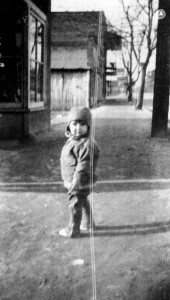
Ronald Cohen, near iii years old, standing in front of Marcus Section Store on Porcher Avenue in Eutawville SC, ca 1929. Collection of Ronald Cohen
Another deviation between the urban North and the rural South was the type of housing, though crowded living conditions were common in both regions. In New York nosotros lived in multi-family buildings. Anybody had a tough time financially due to the Depression. Many could not afford the rent, and then families doubled up. In my v-room apartment nosotros often had 2 or more than families living together. I frequently slept on the sofa or a makeshift bed or the flooring.
In Eutawville we lived in single-family homes, shared by multiple siblings and their children, and even boarders similar Zaks. All lived together; all shared a common repast. The front end door was e'er open to family and friends. Frequently the cooking and cleaning was done by blacks, whom the Jews regarded not only every bit helpers, but as friends.
Eutawville water came from a well, in contrast to the public h2o system we had upwards due north. The firm did not have indoor plumbing on my get-go few visits. When they installed within water it was like a revolution!
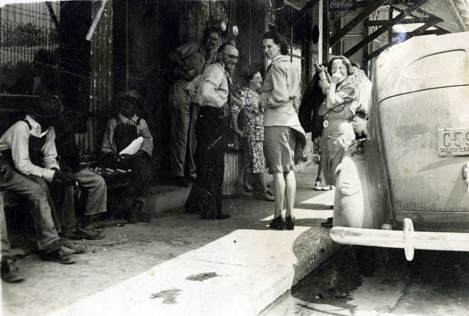
Cohen siblings standing in front of the West Store, just a few feet from Marcs Department Shop in Eutwville.
Collection of Blanche C Cohen
I think the outhouse in the backyard, and, in detail, a comical incident when Sam Young, husband of Katie'south daughter Sadie, went into the privy and one of the children closed a lock on the door, trapping him inside. We heard his calls for assistance and let him out. Nosotros thought information technology was funny but he did not run into the sense of humor. Thinking back I wonder why there was a lock on the outside of the outhouse in improver to inside.
When it came to race relations, I noticed that blacks in the North seemed to feel gratis to limited their anger, whereas their counterparts in Eutawville were afraid to speak their minds; they were always respectful to whites, being sure to say, "Aye, ma'am" and "Yes, sir." Jews got along fine with blacks in Eutawville. Perhaps information technology was because both groups knew what it felt like to be subjected to bigotry. I remember, as a child, on 2 occasions, men banging on our forepart door in the Bronx and yelling, "Kike—open!" Never in one case did I feel the aforementioned prejudice in Eutawville.
Hither's some other, more subtle, example of northern prejudice: My male parent endemic ii houses in the Bronx known as 1316 and 1318 Herschel Street. He made patterns for sewing pleats in women's dresses. He sent out advertising to potential customers under two names: Louis Cohen, 1318 Herschel Street, and Al Miller, 1316 Herschel Street. One day one of my father'due south best customers came in from New Haven, Connecticut, to run into Louis Cohen. After they finished their business transaction, he asked if my father would introduce him to Al Miller. My begetter told him Al Miller and Louis Cohen were one and the same person. His customer started laughing. My father asked him what was so funny. He told my begetter that some of his concern assembly in New Haven told him not to deal with Louis Cohen. He should only deal with Al Miller, as he was honest and reliable. They warned him, "You lot cannot trust Louis Cohen." As a kid I listened to this conversation and it fabricated a lasting impression. I played with anyone regardless of religion. We were merely friends.
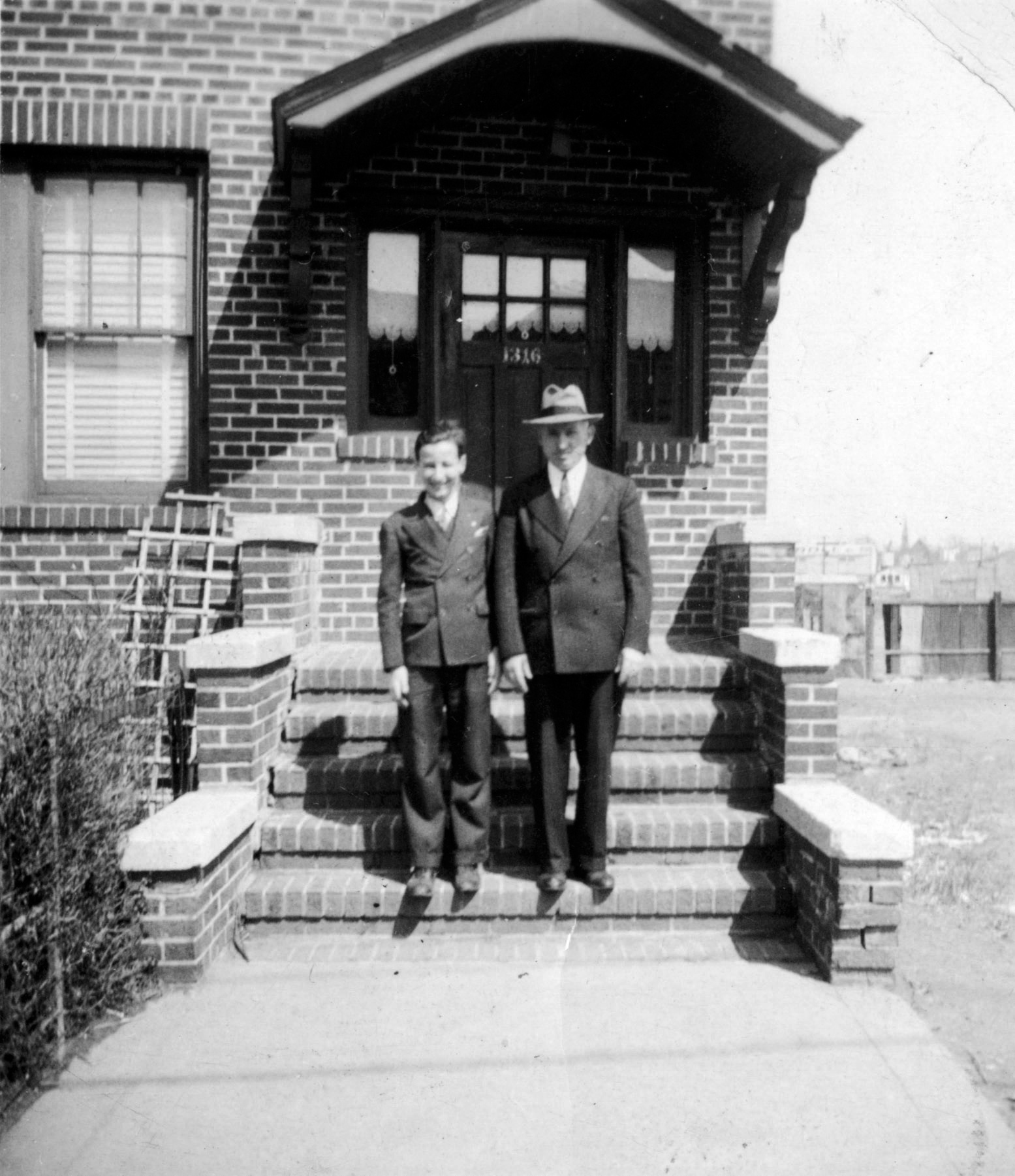
Ronald Cohen and his father, Louis, on the steps of their Herschel Street home in the Bronx.
Collection of Ronald Cohen
The rural Southward was viewed past New Yorkers as a hotbed of anti-Semitism. From what I saw and experienced, the reverse was truthful. Equally a kid it was only in Eutawville that I felt safety, costless of anti-Semitic detest. I was attacked and beaten up 3 times as a child by gangs of anti-Semites in New York. This never happened to me any place in the rural South. It is with sadness I see the demise of a warm, vibrant, culture, filled with family and friends. The migration to urban areas has economic advantages just the intimacy I witnessed in Eutawville is lost in the big cities.
Source: https://jhssc.org/eutawville-a-view-from-the-north/
0 Response to "Karesh Family in Charleston, Sc#q=karesh Family in Charleston, Sc"
Post a Comment